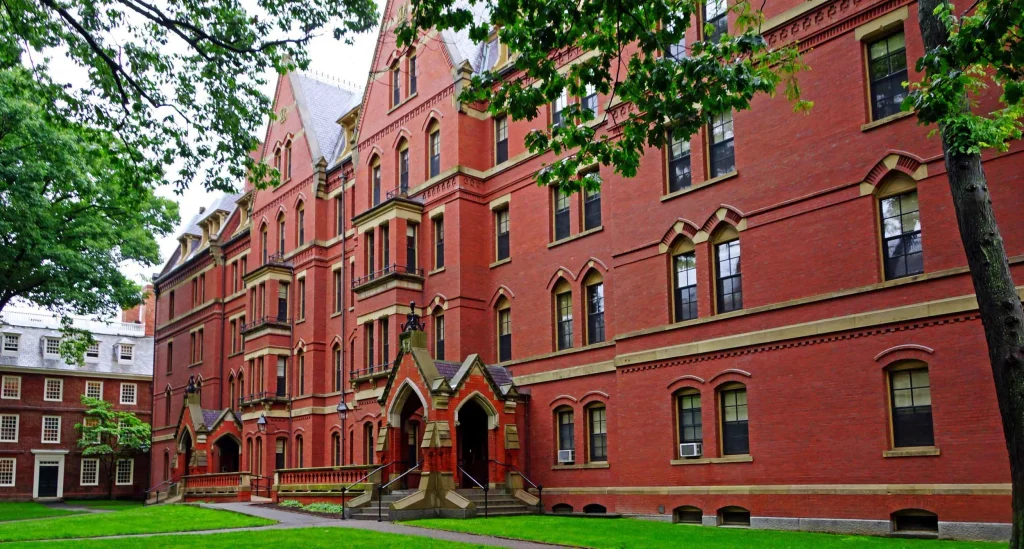
Harvard University is one of the most prestigious and historic universities in the United States. Located primarily in Cambridge and Boston, Massachusetts, Harvard has played an important role in American higher education, research, and public life for nearly four centuries. Founded in 1636, it is the oldest institution of higher education in the United States.
Today, Harvard brings together students, faculty, researchers, and alumni from around the world. The university reports more than 24,000 undergraduate and graduate students, more than 20,000 faculty and staff, and more than 400,000 alumni worldwide.
A Brief History of Harvard University
Harvard was founded on October 28, 1636, by a vote of the Great and General Court of the Massachusetts Bay Colony. It was established as the first college in the American colonies.
The university was named after John Harvard, a major early benefactor. Although he did not found the institution, he left half of his estate and a library of more than 400 books to the school. His contribution helped establish Harvard’s early academic foundation.
Over the centuries, Harvard expanded from a small colonial college into a major global research university. Its history includes important developments in education, science, medicine, law, government, business, and the humanities.
Harvard’s Academic Programs
Harvard offers a wide range of undergraduate, graduate, and professional programs. Harvard College provides undergraduate education, while the university’s graduate and professional schools offer advanced degrees in many fields.
Students can study subjects including:
- Computer science and engineering
- Business and economics
- Medicine and public health
- Law
- Political science and government
- History
- Biology and other sciences
- Mathematics
- Literature and languages
- Education
- Public policy
- Arts and humanities
Harvard also provides online courses, continuing education, and professional learning opportunities for students and working adults.
Research and Innovation
Research is a central part of Harvard’s mission. Students and faculty participate in research across disciplines, from medicine and technology to history, economics, environmental science, and the social sciences.
The university’s large academic community encourages interdisciplinary research. Students can work with professors, participate in research projects, and explore subjects beyond the boundaries of a single academic department.
Harvard’s long history has also produced many influential scholars, researchers, writers, scientists, business leaders, and public figures.
Harvard Campus and Location
Harvard’s historic center is in Cambridge, Massachusetts, across the Charles River from Boston. Harvard Yard is one of the university’s best-known locations and contains historic buildings, libraries, classrooms, and student spaces.
The university also has significant campuses and facilities in Boston’s Longwood and Allston neighborhoods.
The Boston-Cambridge location provides students with access to museums, cultural institutions, businesses, hospitals, technology companies, and other educational institutions.
Admissions to Harvard
Admission to Harvard is highly competitive. The university evaluates applicants using a broad range of factors rather than relying only on academic grades or test scores.
Harvard states that it considers academic achievements, extracurricular activities, personal qualities, and life experiences when reviewing applications.
For first-year applicants, the application includes the Common Application and Harvard-specific questions, academic records, teacher recommendations, and other required materials. Harvard’s current application information also lists SAT or ACT scores as a requirement, along with other application components.
International students are welcome to apply, and Harvard states that its admissions and financial-aid processes apply regardless of nationality or citizenship.
Because requirements and deadlines can change, prospective students should always check Harvard’s official admissions information before applying.
Financial Aid
The cost of attending a leading American university can be a major concern for students and families. Harvard provides financial assistance through grants, scholarships, fellowships, and other forms of support.
The university says financial assistance is provided across many of its schools and programs, with undergraduate aid supported substantially by its endowment.
Students should carefully review Harvard’s current financial-aid policies and eligibility requirements when planning an application.
Student Life at Harvard
Life at Harvard extends beyond classrooms and examinations. Students can participate in clubs, student organizations, athletics, cultural activities, publications, community service, research projects, and other extracurricular activities.
Harvard’s diverse community includes people from many backgrounds, cultures, identities, experiences, and perspectives. This creates opportunities for students to interact with people who have different interests and viewpoints.
The university’s residential environment also plays an important role in undergraduate life, helping students build friendships and connections during their time at Harvard.
Harvard’s Global Alumni Network
One of Harvard’s major strengths is its extensive alumni community. The university reports more than 400,000 alumni worldwide.
Harvard graduates have gone on to careers in government, business, science, education, medicine, law, journalism, technology, entertainment, and many other fields.
This global alumni network can provide graduates with professional connections and opportunities in different industries and countries.
Why Do Students Choose Harvard?
There are many reasons students consider Harvard, including:
Academic excellence: Harvard offers programs across a wide range of disciplines and supports extensive research.
Historic reputation: Founded in 1636, Harvard has nearly four centuries of institutional history.
Research opportunities: Students can engage with researchers and explore projects across numerous academic fields.
Global community: Harvard attracts students and scholars from many parts of the world.
Career opportunities: Its alumni community and connections with organizations across many industries can be valuable after graduation.
Location: Being in the Boston-Cambridge area provides access to a major center for education, medicine, business, and technology.
Is Harvard Right for You?
Harvard is highly selective, so prospective students should not focus only on its reputation. A university should be chosen based on academic interests, career goals, financial circumstances, preferred learning environment, and personal priorities.
Students interested in Harvard should research their intended program carefully, understand the admission requirements, prepare their application well in advance, and explore available financial-aid opportunities.
Conclusion
Harvard University represents nearly four centuries of American higher education and remains one of the world’s most recognized universities. From its founding in 1636 to its present-day role as a global research institution, Harvard has built a remarkable academic tradition.
For students considering Harvard, the university offers opportunities in a wide range of academic disciplines, access to extensive research, a diverse student community, and a large global alumni network. However, admission is highly competitive, and applicants should carefully evaluate whether Harvard’s programs and environment match their individual goals.
Ultimately, Harvard’s greatest attraction is not simply its famous name, but the combination of education, research, community, history, and opportunity that defines the university.